
Lead Generation Strategies That Actually Bring In Customers
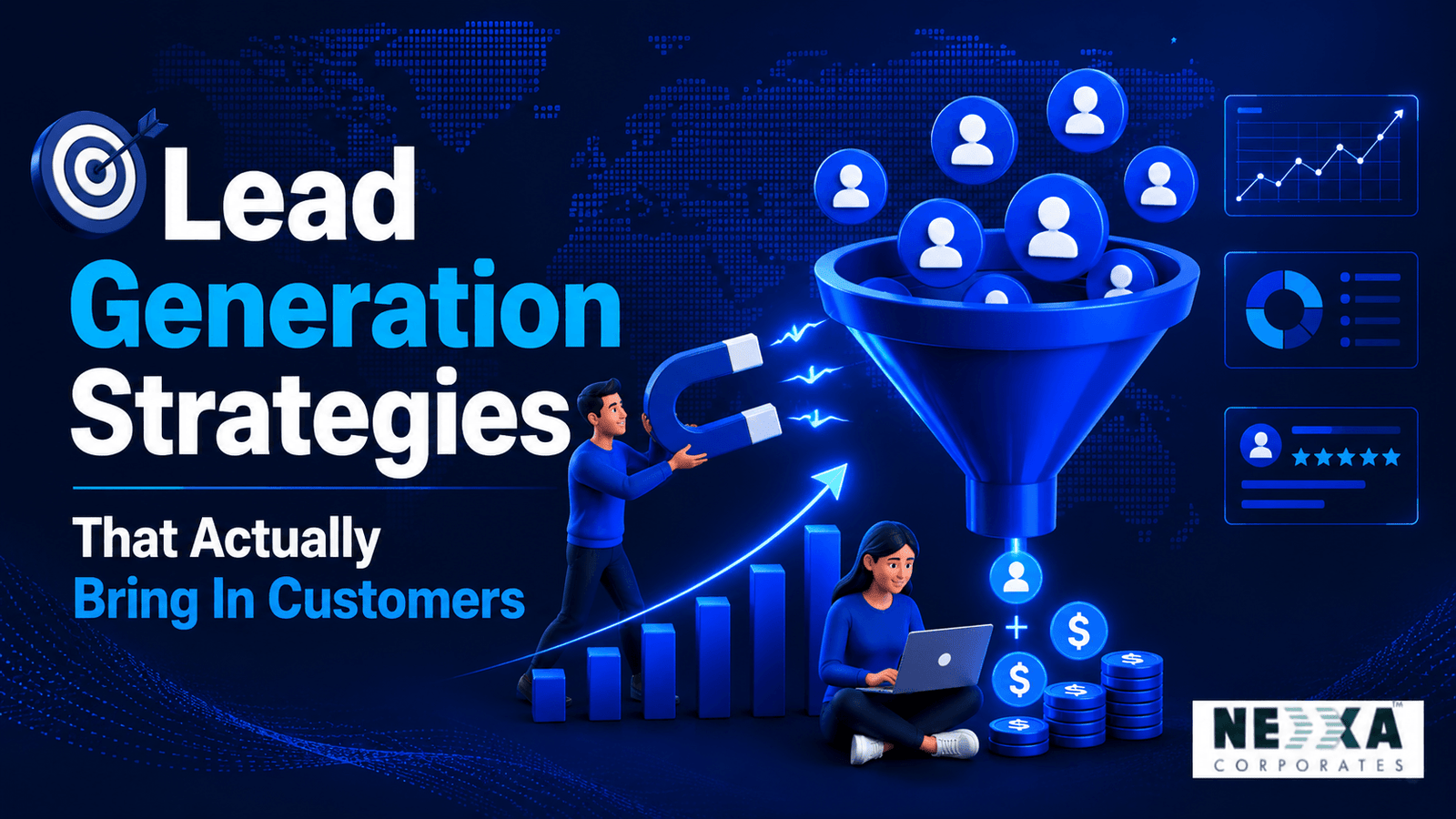
Whether you’re managing a small business or launching a brand-new startup, you understand the core problem. It doesn’t matter how exceptional your product is in its niche, how professional your website looks, or how persuasive your sales talk can be.
Hence, the significance of lead generation strategies today. After all, these methods divide successful companies from those that get stuck after the initial spurt of the first couple months. Many people equate lead generation strategies with pouring cash into advertisements and seeing if anything comes of it.
In the world of business, this simply isn’t the case. Consistent success with new customers is typically achieved by combining different tactics, including well-placed paid ads that supplement organic content, ingenious use of messaging applications and the visual power of social media such as Instagram, and various messaging apps for client interaction.
In this article, we will take you step by step through what actually makes small companies and their marketers win today.
Why Most Lead Generation Strategies Fail Before They Start
The fact that the businesses do not view this process as ongoing activity is one of the main causes of campaign failure. Simply said, company owners run their one-time advertising campaign, produce a number of leads, and hope that they will continue to attract new customers at the same pace.
Most businesses regularly fail at lead generation strategies because they don’t know how to do it. People forget that they should not only depend on one marketing tool; instead, they ought to always improve their approach in order to draw more possible customers.
The consumers nowadays do not buy from the first business they come across. These days, they usually check reviews and investigate their choices before committing.
Therefore, a consumer might use a Google search to locate your business, follow you on Instagram, read your reviews, and seek help on WhatsApp from a friend. These activities indicate their interest in your company; therefore, you ought to pay attention to every phase of the purchasing process.
Furthermore, lead generation strategies presents still more dangers. Most often one is thinking that the more leads the better.
Should you run any commercials, it can be difficult to make sure that every single person who has seen your ad is truly interested in your offer. It might be that only a small portion of them will buy your product or service and most of them have spent their time and money.
Understanding Organic Lead Generation Strategies
Organic lead generation is the idea of piquing possible customers’ interest in your business free from direct payment. Using this strategy, companies don’t depend on paid promotion of their goods and services. Rather, by producing excellent material and interacting with their audience, they receive free leads.
Although they take more time and work, organic methods usually produce superior quality leads.
Those who seek you out voluntarily through free sources are prospective clients depending on your company’s interests. Since they already believe and support your company, they will probably be with you for quite long.
Bloggers who publish useful content on their site are one kind of organic lead generation strategies. The content might be “The 30-day deadline for submitting your taxes” or “How small companies may lower their tax obligation.” They grab the interest of their intended audience by providing helpful content.
More useful material they offer will draw more interested customers. Businesses so don’t have to spend any money on advertising their services yet still get leads and increase their reach.
Organic lead generation strategies uses several approaches to foster close relationships with the intended audience. Such techniques include SEO, Performance Marketing, content marketing, email marketing, referral and loyalty programs, social media marketing, networking, and community building.
Though it takes much longer for them to show results, they have long-term worth. Those ready to wait for many months to a year, though, will be rewarded for their work with a constant stream of leads that will help their company to grow for years.
WhatsApp Lead Generation Strategies : An Underused Channel
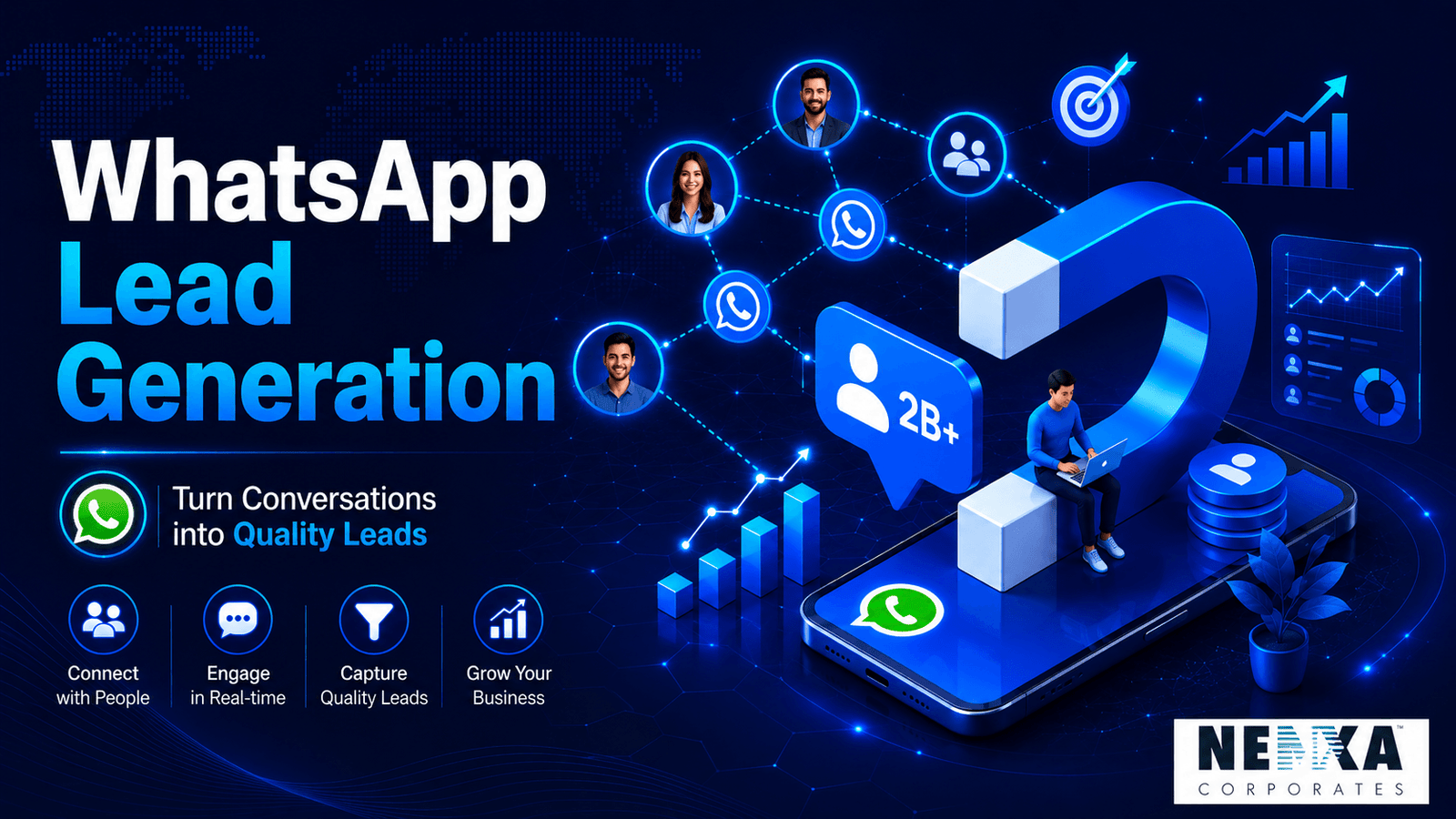
There’s this one element many businesses miss out on. With more than two billion users globally, WhatsApp is where customers often find the ease of having a “real” conversation, particularly in Asia, Middle East, and Latin America markets. The reason WhatsApp lead generation strategies works is by eliminating the hassle of forms and emails. Customers will reach out to you exactly like they would a friend.
Think of a boutique furniture shop placing a WhatsApp click-to-chat button on their site and bio. Rather than seeing website visitors bounce off who wouldn’t bother filling in a form, you capture a prompt “Hey, do you have this in walnut finish?” message which may convert to a sale on the spot. To leverage this for lead gen, businesses normally combine a handful of tools like: WhatsApp Business API (to automate responses, list products), Click-to-chat links (on your website, ads, social bio), Broadcast list (for promotions, but use sparingly to avoid spam), Quick reply templates for frequent queries.
The companies that excel at using WhatsApp for lead generation strategies also ensure to use it like a sales chat, and not a blast messaging service. Sending many broadcast messages, or a large number of unsolicited chats, can have a boomerang effect, as many customers are fast to block.
Instagram Lead Generation Stratigies for Modern Brands
It’s not a picture-sharing app with 50 filters; Instagram can serve a major purpose for your company to promote a product/service (e.g., apparel, a fitness class, or cuisine). Should your business function within such a sphere, Instagram can provide a useful tool to establish connection.
The way to get there isn’t as complicated as one would think. So, the strategy isn’t exactly rocket science. Utilize your content—videos, images, stories—to build confidence and an established presence among potential consumers.
Then, present an invitation of some sort—a direct message, click to your web page, or simply complete a data-entry form for information purposes.
Consider a coach in fitness who records quick tutorials for squats on their page, coupled with an encouraging caption inviting, “to receive your personal workout plan, DM me”. Through these actions, you’re capable of garnering an immense client list without investment; increase audience size via paid advertising on your post and watch it snowball!
Even more effectively, Instagram provides advertisers with functionality to place sign-up offers or lead generation strategies prompts right on their ads, allowing for direct engagement with interested consumers within the app, without the redirection to external links or pages.
Content Marketing as a Long-Term Lead Magnet
Content marketing is one of the most reliable and lucrative methods of generating leads through long-term investment. It involves SEO, organic outreach, and social media engagement in which blog posts, video content, downloadable guides, infographics, and case studies can be used to accomplish said goals.
All of these types of content share the common purpose of providing an answer to the problems a potential customer may face, thereby introducing the business while addressing the issue. This strategy’s success depends on being able to provide the kind of information one’s audience is seeking and benefitting them in the process.
When a customer has an issue they wish to research, the first place they are likely to turn to is not the company page directly. Instead, they may look to Google or other search engines to get an idea of how to handle the problem.
For instance, instead of searching “best digital marketing agency,” they may ask “How to get more leads for my business” or “How to get better website conversion rates.” Therefore, if the content is informative enough for the customer to reach them, it can effectively make the business appear before the consumer even when they are not yet interested in purchasing services directly.
As such, it is critical to remember that marketing almost always requires a certain amount of content creation, where articles and other media pieces are developed with the intent of appealing to other people. Articles that contain little to no actionable content may rarely benefit both the consumer and the company, as the former is unlikely to read it for entertainment or to find out what the latter has to offer.
Instead, customers tend to seek knowledge, solutions to their problems, and sometimes even entertainment. As such, building an online presence and engaging in content marketing is ultimately a way to provide value to one’s audience while helping the company reach out to the public without relying on hard-sell advertising.
Email Marketing Still Works, Just Not the Way It Used To
Some of us might write email marketing off, but it still provides the best return, especially once you’ve got a list of interested leads. Today, that’s differentiated by making your emails more personal.
Blasting out to the entire email list, as used to be common, often just isn’t effective anymore. Dividing people based on their actions—like what you’ve downloaded, or the pages on your website they looked at—makes emails a more useful conversation to have.
For example, an email sequence to someone that downloads a price sheet will be entirely different from a welcome email sequence sent to someone signing up to a free trial. This kind of personalization can also be done through tools even if your team is fairly small.
Send a welcoming email sequence to get new signups warmed up, a couple of emails that add value to your leads, and then one more well-timed email making an offer. Email is no replacement for WhatsApp and social media, but it is definitely an add-on to help nurture potential customers who are not ready to buy at this stage.
Paid Advertising and Why It Should Support, Not Replace, Organic Efforts
Fast lead generation strategies brings the most obvious concept of focused marketing on sites such Google, Meta, and LinkedIn. They do help you to exponentially grow your clientele and acquire premium leads. If you choose, however, to rely only on paid ads, your campaign budget will run out fast and you will soon lack leads.
Using a mix of paid and organic lead generation strategies would help you to get leads of high quality over a long period. While the latter will guarantee a steady flow of clients in the long run, the former will provide you a respectable ROI in the short run. Basically, you will be able to combine the best of paid marketing and organic promotion, therefore removing the flaws present in each.
Assume you want to greatly raise sales having recently entered a new industry. In this instance, using paid ads to create leads helps the business to be known. You’re developing your organic advertising—blogging, SEO, and social media—as the campaign is going on.
You can stop your ad campaign in a few months when you have a good amount of regular guests, sure of the consistent stream of consumers.
Using both organic and paid lead generation strategies helps you to be far more relaxed about the long-term prognosis of your company. The latter helps to drive short-term sales growth and therefore provides room for maneuver; the former builds the visibility of the company.
Furthermore, given your organic flow, you will not be left without new clients when the advertising budget is being spent. Hence, you will be able to answer current rising demand at any one time.
Landing Pages and Forms: The Small Details That Change Results
Though many businesses invest heavily in Google Ads, social media, email marketing, and SEO to drive website traffic, they often overlook the most important element—the landing page. This is where visitors decide whether to take action or leave.
Even a small mistake on a landing page can reduce conversions and waste your marketing budget. On the other hand, optimizing the page for conversions can significantly improve your results.
A few simple changes can make a big difference. Use a clear headline that immediately explains the offer. Remove unnecessary form fields so visitors can complete the form quickly and with less effort.
Add trust signals such as customer testimonials, reviews, certifications, or guarantees. These elements reassure visitors and increase their confidence in your product, service, or consultation.
Another effective improvement is using a stronger call-to-action (CTA). Instead of a generic button like “Submit,” use action-oriented text such as “Book My Free Consultation.” One of our dental clients made this simple change and saw appointment bookings increase significantly within a few days.
Since most visitors access websites through mobile devices, your landing page must be fully responsive. It should load quickly, display correctly on every screen size, and feature large, easy-to-tap buttons that provide a smooth user experience.
Common Lead Generation Mistakes Businesses Should Avoid
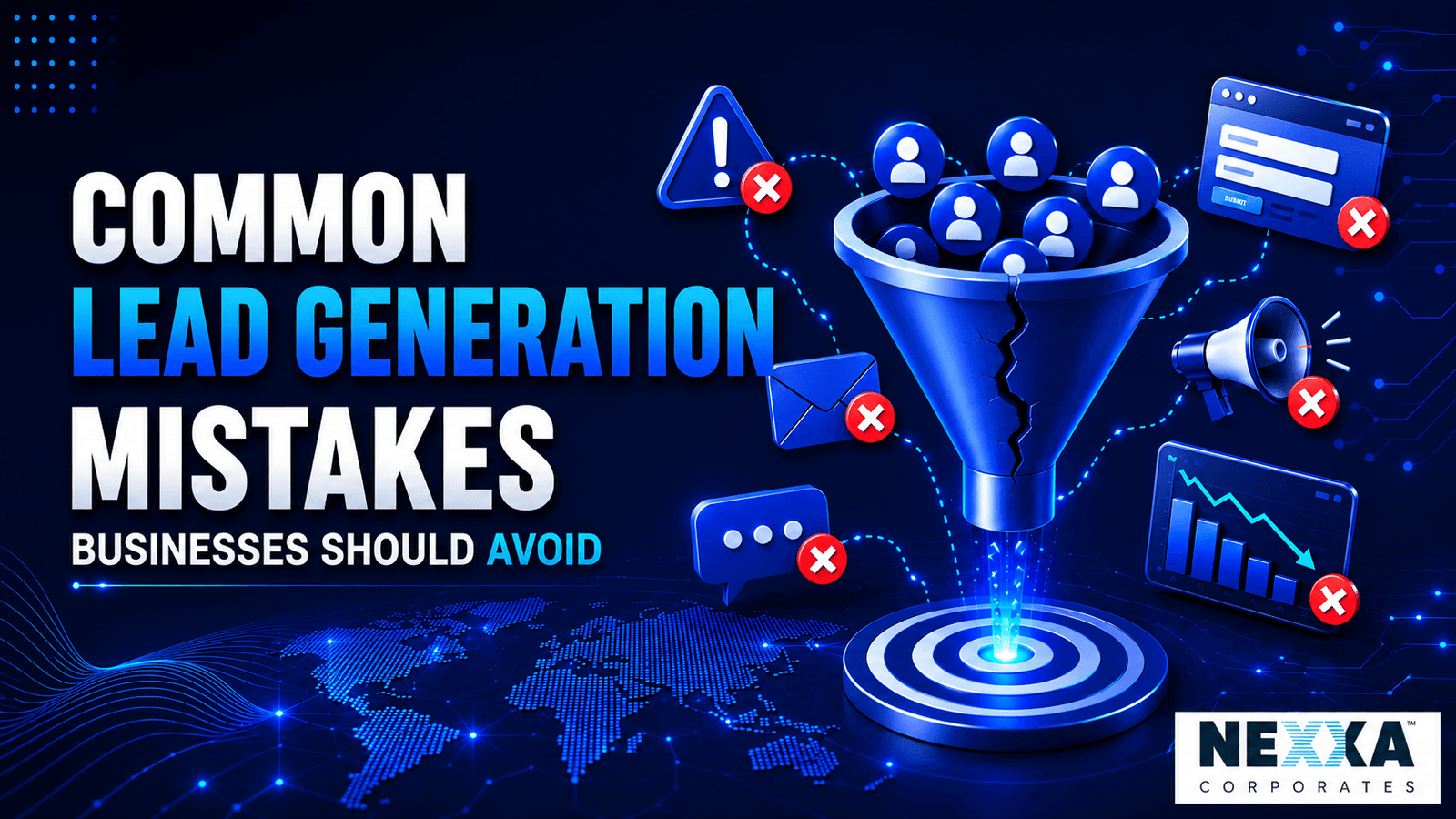
There are several patterns that repeat in most industries; some of them you can recognize right away.
- Trying to learn every new channel instead of building true expertise in one or two areas
- Neglecting the response time—if the call happens minutes after you contact a lead, their conversion chances are significantly higher than if they had to wait an entire day
- Focusing too much attention on lead quantity and not enough on who ultimately becomes a paying customer
- Forgetting to personalize the outreach based on the conversation or the content the lead interacted with
- Checking off the boxes of traditional lead gen without actually measuring the impact on sales
And fixing even one or two of these recurring issues often leads to a substantial improvement in the lead generation quality, even without touching the marketing budget at all.
Choosing the Right Lead Generation Strategies for Your Business
There is no one-size-fits-all solution to this question, since a B2B software company will most probably have different needs than a local restaurant. It is important to assess which communication channels your customers are using on a regular basis and what they prefer to use when interacting with businesses like yours.
An analysis of the communication channels used by customers is essential for choosing the most appropriate ones for your own business. First of all, you may want to take a closer look at the people who have already chosen your product or service and see how they found you in the first place.
Chances are that these are the most relevant sources, so it is advisable to prioritize them over other channels that may seem interesting but have little to do with your customers’ preferences.
You should also consider allocating some time and resources to testing purposes before making any final decisions about which platform(s) you want to invest more into promotion-wise. For example, running an advertising campaign across two different platforms for a certain amount of time (say, one month) will give much better insights than mere speculation could ever hope for.
Then, based on these findings, further steps can be taken towards improving lead generation strategies performance via whichever source proves itself worthy enough after said trial period has expired.
Bringing It All Together
Lead generation strategies work best when they’re seen as an integrated system – not individual tactics. Lead generation strategies the best lead generation companies understand: a lead generation machine doesn’t just generate a list. Lead generation strategies is best approached when it is treated as a cohesive system rather than disparate tactics. Organic lead generation strategies creates a trusted relationship and lower cost in the long term.
WhatsApp lead generation strategies will catch any of the conversation you’re losing. Instagram leads capture customers right where they are currently at their screens. Paid advertising and email marketing tie everything together so your lead funnel keeps flowing. Companies with the best results generally do not implement something that is exotic, unusual, or extraordinary.
Instead, they implement consistent principles, with focus on what customers want and need, and employ a blend of a few different channels instead of staking their claim in one place. If your team is lost for direction, consider teaming with experts with prior experience designing those lead generation strategies such as those at Nexxa Corporates.
FAQ
1. How can small businesses make the best lead generation strategies?
2. How are organic lead generation and paid lead generation different?
Organic lead generation refers to the process of attracting leads through SEO, content, and referrals. It has a long-term impact on the business and provides continuous value. On the other hand, paid lead generation is a short-term process that requires continuous spending to yield sustainable results.
3. Is it possible to produce leads using WhatsApp?
WhatsApp is an excellent channel for lead generation strategies because it helps the business owners to establish direct contact with the customers. With the help of WhatsApp Business, you can add WhatsApp button to your site and social networks to get in touch with your customers in a blink of an eye.
4. How can I utilize Instagram to create extra leads for my organization?
Instagram lead generation strategies refers to the act of getting people to visit your profile, keep them engaged by providing value, and eventually turn them into leads through your posts, stories, direct messages, and calls-to-action. Maintaining the right content strategy plus using the best hashtags can drive traffic and help you get high-quality leads.