
7 Proven Types of Search Engine Marketing Every Marketer Should Know in 2026
SEO, also referred to as Search Engine Marketing (SEM), is a highly efficient digital marketing technique that enables companies to increase their visibility, attract specific traffic, and improve the number of conversions. Understanding the various types of search engine marketing is vital for entrepreneurs, business owners, freelancers, students, and marketers who want to get the most out of their efforts. Utilizing SEM effectively, businesses are able to draw people who are actively looking for their services or products, generate leads of high quality, and improve their marketing budget to achieve the most effective results.
It doesn’t matter if you’re advertising an online store, a local company, or a service-oriented website; SEM can be used to get in touch with prospective customers. This guide will cover the different types of marketing through search engines, as well as offer actual examples of marketing using search engines and provide efficient SEO tools to assist businesses in achieving the success they desire in 2026.
What Is Search Engine Marketing (SEM)?
Definition of Search Engine Marketing
SEO Engine Marketing, also called SEM is the process of advertising websites as well as online content by utilizing ads that are paid for on search engines like Google or Bing. Contrary to Search Engine Optimization (SEO) which is based mostly on results from natural sources, SEM is focused on immediate recognition via paid ads. It permits companies to be prominently displayed on search results for specific keywords. It also connects potential buyers who may be interested in purchasing.
How SEM works
SEM allows advertisers to compete with the keywords people are looking for. When a user typed the search query using the internet using a search engine the website will run an auction of ads in order to find out which advertisements from different companies are most prominent or least prominent among the search results. Advertisers are only paid if consumers are able to click on their ads that’s the reason this method is known by the name Pay-Per Click (PPC) advertisement. This technique ensures that ads are based upon how they perform for their customers and is effective in the sense of costs.
Difference Between SEO and SEM
The main distinction in SEO as well as SEM is the way of getting noticed. SEO concentrates on developing long-term organic rankings by creating content, backlinks and site structures. SEM, however, is the other way around. It gives immediate exposure via paid advertising. Both strategies work tandem and complement each other SEM is an extremely effective strategy for companies seeking to increase immediate traffic. It is important to focus on the keywords that are most competitive, and get quick and tangible results.
Why SEM Is Important in 2026
By 2026 SEM is going to be a must for businesses who want to stay at the leading edge. With increasing numbers of businesses investing in digital marketing and online advertising, being able to reach out to customers in accordance with their intentions and their location, in addition to their device and habits is more essential today than ever before. SEM campaigns provide flexibility and deliver tangible results. They also speed up the generation of leads. This permits marketers to change strategies rapidly according to analysis of data and information on performance.
Benefits of Search Engine Marketing
SEM has many benefits it offers, such as increased effectiveness of search results, personalized advertisements that are quantifiable and effective, aswell in generating leads faster. By utilizing strategically SEM, businesses can connect with their customers at various points of their buying journeys to improve ROI and increase branding across multiple channels.
SEM Benefits Its Instant Visibility on Search Engines Search Engine Marketing (SEM)offres numerous advantages when it comes to instantaneous visibility on search engines. SEM’s primary benefit lies in its instant presence on the first page shortly after starting its campaign, especially for companies newly established or holding promotional events this summer, or new products being organically ranked which may take some time before organic rankings appear naturally. SEM therefore proves especially helpful when ranking new businesses or products that take some time before seeing results organically. This makes SEM particularly helpful when ranking organically takes some time before happening naturally – which makes SEM especially useful in helping new businesses or products which take some time before showing results organically – providing instantaneous presence at launch time to quickly gain organic rankings over their competition.
SEO campaigns enable highly targeted advertising by targeting keywords, locations, device type being used and user demographics/behavior – to reach those with the greatest likelihood of converting and make marketing efforts more cost effective and efficient.
SEO platforms provide accurate metrics on the performance of campaigns, such as clicks or clicks, conversion rates and ROI. Marketers can utilize this data to fine tune and adjust their campaigns regularly in order to increase success rates while improving overall efficiency.
Search Engine Marketing.
7 Proven Types of Search Engine Marketing
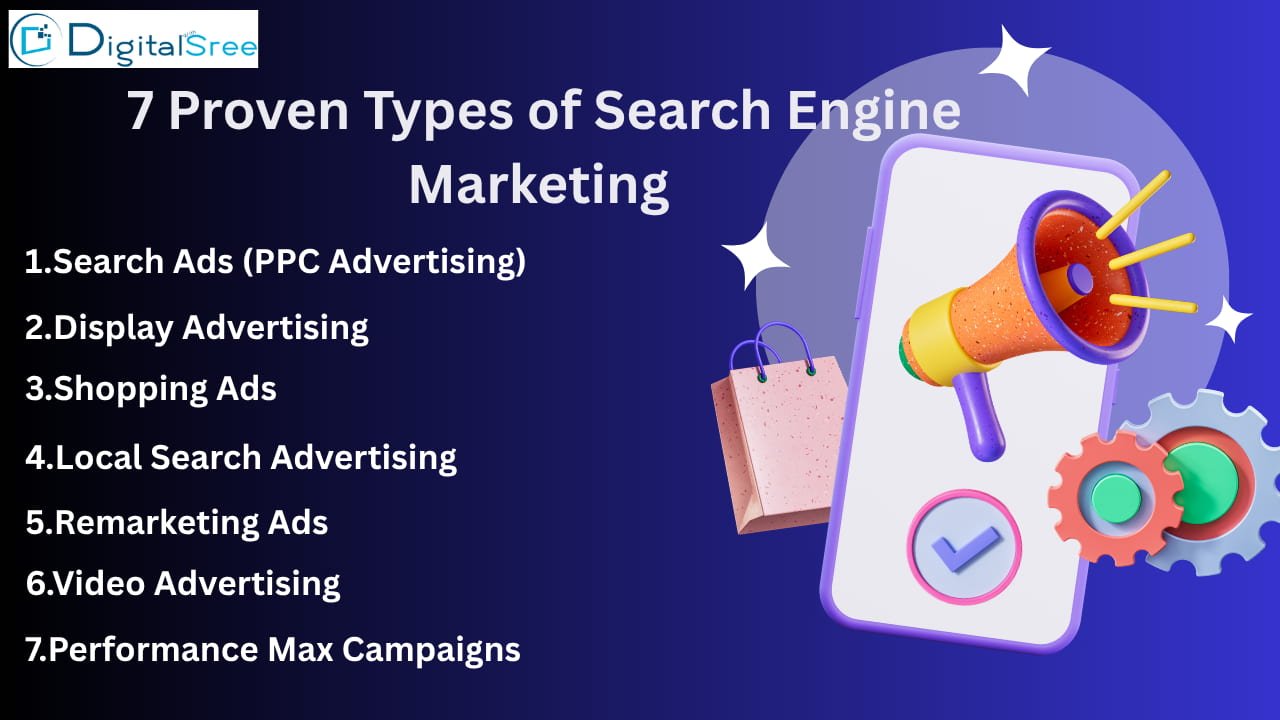
SEM is not a single approach but a combination of different campaign types, each with a unique purpose. Understanding these types is essential for building an effective SEM strategy.
1.Search Ads (PPC Advertising)
Search ads are text-based ads that appear at the top or bottom of search engine results pages for specific keywords. Advertisers bid on keywords, and the ads are shown to users with high purchase intent. For example, a user searching for “best project management software” might see a search ad from a software company. Search ads are ideal for driving immediate traffic, generating leads, and converting users who are ready to take action.
2.Display Advertising
Display advertising uses visually engaging banners, images, or animations to reach users while they browse websites or apps. Unlike search ads, which target active searches, display ads focus on awareness and engagement. For example, a fashion retailer might use display banners on lifestyle blogs to attract potential customers. Display advertising helps with brand recall, storytelling, and nurturing leads over time.
3.Shopping Ads
Shopping ads are specifically designed for e-commerce businesses. They display product images, pricing, store details, and ratings directly in search results. For instance, a user searching for “wireless headphones” may see shopping ads from multiple retailers. These ads increase product visibility, attract purchase-ready traffic, and improve conversion rates.
4.Local Search Advertising
Local search advertising targets users in specific geographic areas. Ads appear in Google Maps, local search results, and mobile searches, helping local businesses attract nearby customers. For example, a dental clinic can show up for searches like “dentist near me.” Local campaigns are essential for businesses that rely on foot traffic or local clientele.
5.Remarketing Ads
Remarketing focuses on users who have previously interacted with your website but did not convert. These users are shown targeted ads as they browse other websites, reminding them of your products or services. Remarketing is effective for recovering lost leads, improving conversion rates, and maximizing the value of existing traffic.
6.Video Advertising
Video advertising allows marketers to promote content through platforms like YouTube. Video ads can appear before, during, or after video content or even in search results. They are highly engaging, excellent for storytelling, and effective for building brand awareness. For example, a software company may create tutorial videos to educate potential customers while promoting their product.
7.Performance Max Campaigns
Performance Max campaigns use AI to optimize ads across multiple channels, including search, display, YouTube, Gmail, Discover, and Maps. These campaigns automatically adjust targeting and bidding to maximize performance. Businesses can achieve better conversions with less manual management, making Performance Max ideal for scaling campaigns efficiently.
Search Engine Marketing Examples
Experiments with real circumstances illustrate the way SEM can be utilized to promote various types of advertising strategies.
- Google Ads,: the company that designs and develops software, offers “project managing software” which can be seen on the right-hand side of results.
- Display ads: The well-known online fashion company promotes banner advertisements on websites that concentrate on the lifestyle aspect to improve the image of the brand.
- Shopping ads: A shop on the internet displays products with ratings and pictures and prices, as well as prices that are based on the users’ search.
- Local ads: advertisements focus particularly on “dentist near by” result within the radius of 10 miles.
- Remarketing marketing campaigns: A website specifically designed for those who have been to travel websites who have viewed holiday packages, but did not make a reservations.
- YouTube ads, video ads:A SaaS firm produces tutorial videos via YouTube to entice prospective customers.
The examples show how you can utilize SEM across various industries and with different objectives.
Essential Search Engine Marketing Tools
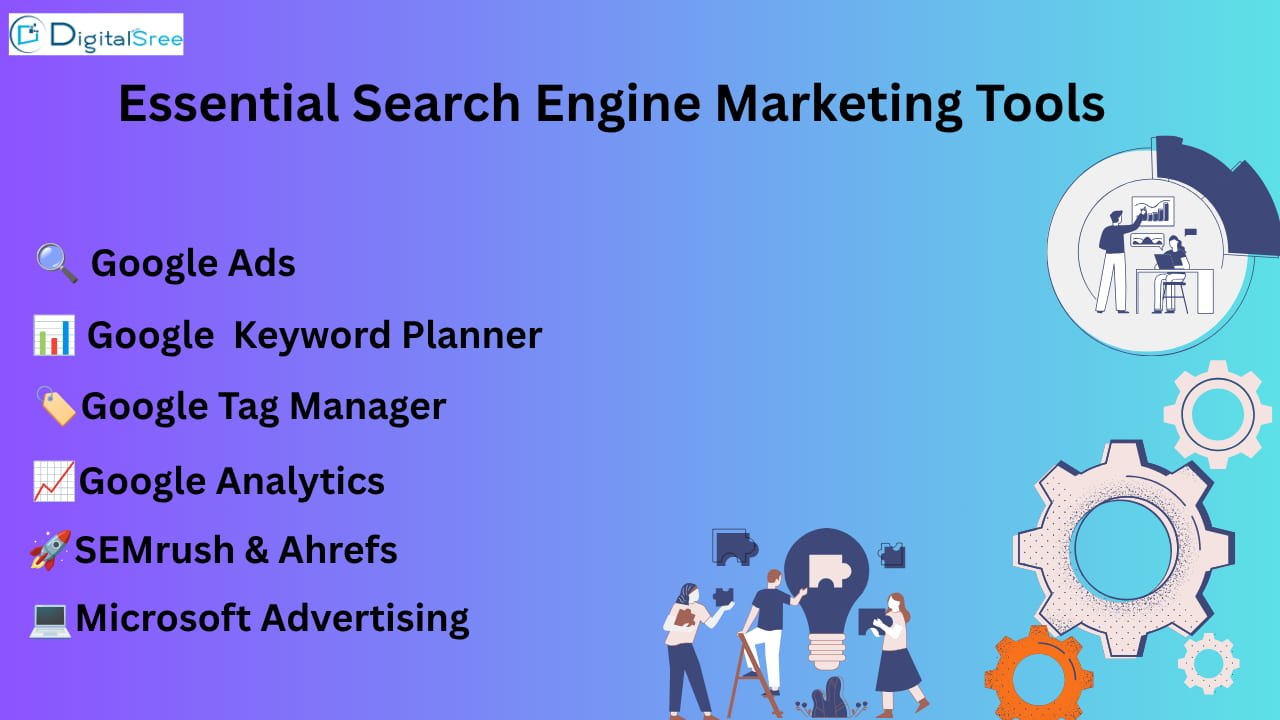
Implementation of a successful SEM strategy involves a mix of analysis, research, and the use of a program. The most efficient software will make sure the campaigns you run are precise, targeted and optimised to provide you with the best return on money.
Google Ads
Google Ads is the most popular platform to conduct SEO. It lets advertisers design and build advertisements that display search and shopping videos and Performance Max campaigns. Google Ads provides targeting options and automatic bidding as well as analytics that allow marketers to increase the effectiveness of their advertisements when they are on alert.
Google Keyword Planner
Google Keyword Planner aids in identifying relevant keywords, calculates the amount of queries that are searched for and evaluates the amount of competitiveness. Marketers can select the most effective keywords to increase the effectiveness of their marketing campaigns and stay away from paying for results from search engines that aren’t of value.
Google Analytics
Google Analytics 4 (GA4) provides information on the actions performed by people who click on advertisements such as websites that are currently in operation in the market, along with the duration of their stay and the amount of clicks. These data will help you optimize your marketing efforts, as well as increase the effectiveness of your marketing campaigns.
Google Tag Manager
Google Tag Manager makes tracking easier through the linking of conversion pixels with event codes. This tool allows you to evaluate the effectiveness of campaigns without having to faith in with the programmers.
SEMrush & Ahrefs
SEMrush, as well as Ahrefs assist with the study of key words, competitor analysis and optimization of marketing strategies. SEMrush gives insight into the possibilities of keywords and strategies to compete with your competitors and Ahrefs aids in the analysis of backlinks and also optimizing website’s content.
Microsoft Advertising
Microsoft Advertising allows advertisers to display ads on Bing along with other platforms in order to reach people who aren’t targeted by Google. This will increase the reach of their ads and decrease cost per click for specific advertisements.
Using these search engine marketing tools ensures campaigns are strategic, measurable, and effective in driving traffic and conversions.
How to Choose the Right Type of Search Engine Marketing
The choice of the appropriate SEM type is based on many variables:
- The is based on the goals of your company. Determine if your objective is to improve brand recognition via lead generation or online selling.
- Based on budget-based campaigns, like advertising for shopping or search, they are highly effective, but they require more funds. However, displays can be upgraded to improve the visibility of your company for less expense.
- digitally determinable by the intended audience based upon the Target Audience. Locate the websites that potential buyers are visiting, and also what kind of content they are using the most.
- depends on the kind of industry and the kind of industry. The competitive industries could require multiple marketing channels. Smaller companies might focus on certain types of marketing.
Conclusion
SEO is a crucial element of any strategy to be implemented by 2026. Understanding the various forms of marketing that are made possible by search engines allows businesses effectively communicate with their customers, increase their visibility, and result in significant enhancements. From search and display ads to local ads, Remarketing and videos, and Performance Max campaigns, each SEM type is distinct and comes with its own benefits and advantages.
Actual examples of the usage of search engines illustrate how different strategies are utilized across different sectors. Marketing tools that utilize search engines may provide insight into ad-hoc targeting as well as the optimization capabilities to increase the return on investment. Through linking the various types of campaigns to the needs of the business, as well as the characteristics of the target audience and budgets, marketing experts are able to devise strategies based on the information they gather and the results.
FAQ
1.What are the main types of search engine marketing?
Search engine marketing includes search ads, display advertising, shopping ads, local search advertising, remarketing ads, video advertising, and Performance Max campaigns.
2.Which type of SEM is most effective?
Search ads often provide the most immediate results because they target users actively searching for products or services.
3.What is the difference between SEO and SEM?
SEO focuses on improving organic rankings, while SEM uses paid advertising for immediate visibility.
4.Are Google Ads considered SEM?
Yes, Google Ads is a primary platform for running SEM campaigns.
5.What tools are used in search engine marketing?
Key tools include Google Ads, Google Keyword Planner, Google Analytics 4, Google Tag Manager, SEMrush, Ahrefs, and Microsoft Advertising.