
How to Improve Website Traffic: A Complete Guide to Attracting the Right Visitors
There’s a thing with traffic, having more doesn’t mean it’s more effective. It’s possible to invest time and money into bringing in customers, but even if they’re not your ideal customers, none of it matters — they arrive, glance around, then walk away. What makes a business more successful is people who are curious about what’s available and are on the verge of doing something about it. This guide outlines a practical and sustainable way to think about how to improve website traffic so it actually converts, rather than simply putting up a bigger number on a graph.
For most companies, it’s not about whether traffic can be increased. With enough advertising budget, virtually any website can attract more traffic. The tougher issue, and the more important one, is how to generate traffic that continues to grow on its own each month, without a paid advertising campaign propping it up the whole time. It all boils down to using the right search terms, content that’s actually valuable, a website that functions effectively on a technical level, and trust signals that are genuine rather than just cosmetic — all moving toward the same goal. That way, people arrive at a high level of interest, and search engines continue to send more and more.
Master Keyword Research & Intent Mapping
Before typing a single word, you need to understand exactly what a user wants to accomplish when they hit “Enter.” In SEO, we categorize this into four types of search intent: informational, navigational, commercial, and transactional. If your page layout doesn’t match the user’s immediate goal, they will bounce within seconds, signaling to search engines that your page shouldn’t be ranked on page one.
To beat out massive competitors, focus heavily on long-tail keywords—highly specific three- to five-word phrases. They have lower search volumes, but the conversion rates are significantly higher because the user has a clear objective.
Create High-Quality, Evergreen Content to Boost Traffic to Website
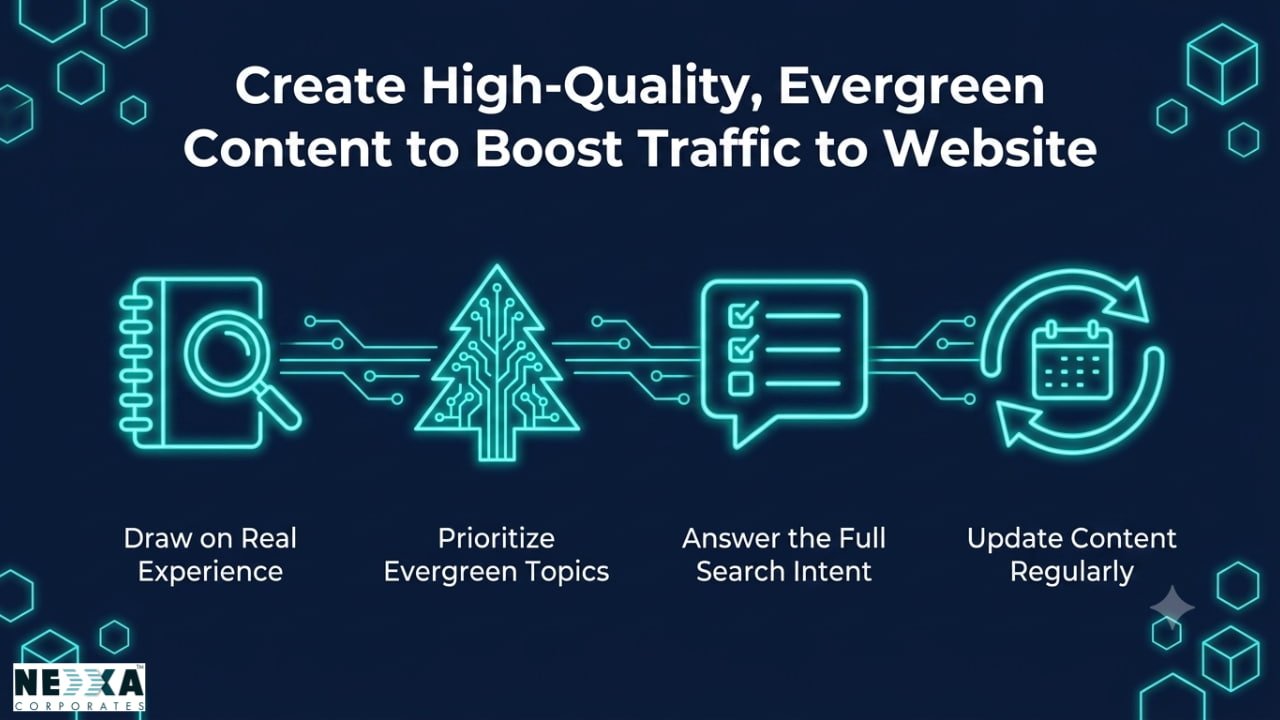
Draw on Real Experience
Search engines are getting better at telling the difference between content that solves a real problem and content that’s simply there to rank. The pages that hold up over time — the ones that keep drawing visitors and help boost traffic to websites long after publication — are usually the ones built on something original: real data, a real-life example, or a method that’s actually been tested. A case study, a small experiment that was actually run, or a step-by-step guide built out of hands-on experience tells both readers and search engines that there’s genuine expertise behind the page, not just a summary of what other sites already say.
Prioritize Evergreen Topics
Timely, news-driven articles have a short shelf life. Evergreen topics — the kind that don’t depend on a passing trend — are worth the extra effort because they keep gaining traffic month after month instead of fading once the news cycle moves on. Building a content plan around a handful of durable, high-value topics is one of the more reliable ways to increase website traffic without constantly chasing whatever’s trending that week.
Answer the Full Search Intent
A page that only partially answers a question will lose visitors to a competitor who covers it completely. Anyone researching how to improve website traffic is usually looking for a full answer, not a partial one — so mapping out every sub-question a reader might have, and addressing each one directly, keeps them on the page longer and signals to search engines that the content genuinely satisfies the query.
Update Content Regularly
Publishing a strong page once isn’t a permanent solution. Revisiting evergreen content every six to twelve months — refreshing statistics, examples, and recommendations — keeps it accurate and keeps rankings from slipping. This ongoing maintenance is often what separates a page that briefly spikes in traffic from one that continues to increase website traffic steadily over time.
Sustainable Link Building Strategies to Increase Website Traffic
Backlinks remain one of the most powerful signals available. However, earning them has to be a matter of quality, not quantity. A single link from a website that’s trustworthy and relevant to the subject is far more valuable than a pile of links from low-quality, random sources. Done properly, this can boost website traffic in a way that mass link-building doesn’t really achieve.
Two approaches worth keeping:
- Guest posts on sites with authority — this earns a backlink, certainly, but it also places the content in front of a new, relevant audience.
- Broken link building — locating dead links on relevant websites and providing something valuable to replace them. It’s simple and low-cost, and it’s a real benefit to the site owner too, making it a much easier task.
The Core Web Vitals & Mobile-First Approach
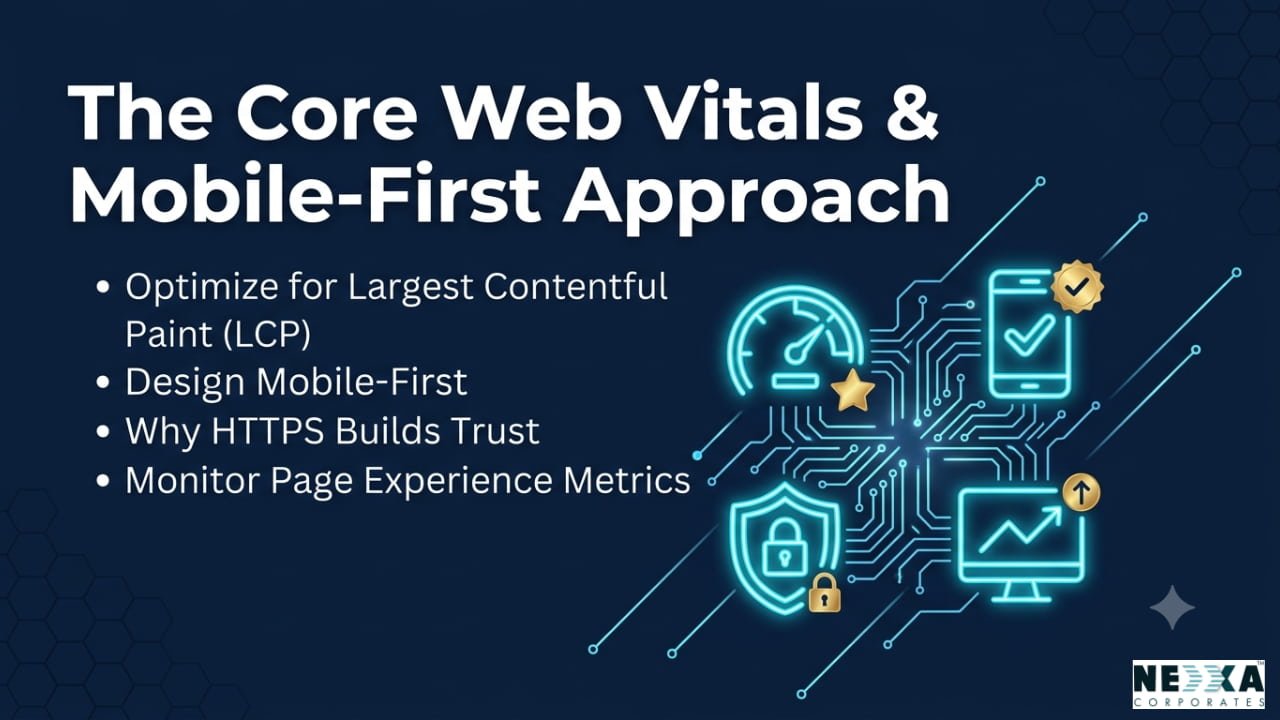
Optimize for Largest Contentful Paint (LCP)
LCP measures how quickly the main content on a page becomes visible. When it’s slow, visitors leave before reading a single word, and that bounce is a signal search engines take seriously. Compressing images, trimming unnecessary scripts, and using faster hosting are some of the more direct ways to improve this number.
Design Mobile-First
Most search traffic now comes from smartphones, so a site that wasn’t designed with mobile in mind is already a step behind — no matter how good the content is. Prioritizing mobile layout, tap targets, and load speed before worrying about the desktop view is one of the more overlooked ways to increase website traffic, since a clunky mobile experience quietly turns visitors away before they even engage.
Why HTTPS Builds Trust
HTTPS is a confirmed ranking factor, and just as importantly, it protects visitors’ data on every page they interact with. At this point it’s less of a nice-to-have and more of a baseline requirement — a site that isn’t trusted by browsers or users tends to lose ground in search rankings at the same time.
Monitor Page Experience Metrics
Core Web Vitals aren’t a one-time fix. Checking them regularly through tools like Google Search Console helps catch regressions before they quietly start to hurt rankings. Treating page experience as an ongoing habit, rather than a box to check once, is part of what makes a strategy to boost traffic to a website hold up over the long run.
Internal Linking & Site Structure
A well-structured website helps search engines understand what matters and how everything connects, and it helps users discover more of what they’re looking for. Descriptive anchor text — wording that tells you what the linked page is about, instead of a generic “click here” — gives search engines real context about the page on the other side of the link.
An effective internal linking structure also spreads authority across a site more evenly, meaning newer pages, or ones that don’t get much direct traffic, still have a chance of being discovered by both crawlers and visitors.
Social Media & Community Engagement
Rankings don’t occur in isolation, separate from everything else happening across the internet. Showing up in the right communities — a Reddit thread, a Quora question, a LinkedIn group — and actually adding something of value, instead of simply dropping a link, builds trust and brand recognition, which eventually feeds into search results even when the link itself isn’t followed.
Expand Reach Through Multi-Channel Promotion
Organic search shouldn’t carry the entire load on its own. The sites that grow fastest tend to treat search as one channel among several, using each one to reinforce the others rather than competing for attention.
Email Marketing for Long-Term Engagement
Email still holds up as one of the most reliable ways to bring people back to a site. A newsletter that shares new content, useful updates, or a quick roundup of what’s changed keeps a business in front of people who’ve already shown interest, rather than hoping they stumble back through search on their own. It also tends to convert well, since the audience has already opted in and knows what to expect.
Choosing the Right Social Platforms for Your Audience
Not every platform makes sense for every business, and spreading effort too thin across all of them usually does less than focusing on the one or two where the actual audience spends time. A B2B service tends to get more out of LinkedIn than Instagram, while a visually driven brand might see the opposite. The point isn’t to be everywhere — it’s to consistently show up where the right people actually engage.
Measure and Adapt with Data
None of this works as a one-time setup. Traffic growth holds up best when it’s checked on regularly and adjusted based on what’s actually happening, rather than what was planned six months ago.
Track the Metrics That Actually Matter
Google Analytics and Google Search Console cover most of what’s needed here — organic traffic trends, keyword rankings, bounce rates, and the paths visitors take before converting. It’s less about watching every number available and more about picking a handful that actually reflect progress toward the goal, then checking them on a consistent schedule instead of only when something feels off.
Turn Search Console Data into Quick Wins
One of the fastest ways to pick up extra traffic is looking at pages already ranking in positions seven through fifteen in Search Console. These are close to page one but not quite there, and often just need a small push: a missing subtopic addressed, a more specific answer to a related question, or a bit of structured data added. That’s usually a faster win than starting a new page from scratch.
Conclusion
Growth in organic traffic is a long game that rewards consistency and patience more than any single clever tactic. It’s also a matter of making adjustments based on what the data actually shows, instead of making assumptions. Websites that combine real expertise, high-quality technical performance, and authentic trust signals are likely to produce traffic that’s not just larger, but also far more likely to convert.
Each piece doesn’t accomplish much on its own. A site that’s slow and has thin content won’t attract anyone’s attention, and great content sitting on a slow, insecure site is unlikely to be found at all. The websites that grow steadily are the ones that treat keyword strategy, content quality, technical health, and trust signals as a single system — revisiting and reworking every component regularly, rather than simply going through a checklist once and moving on.
FAQ
1. How long does it take to see results from SEO efforts?
Most sites start experiencing real change between three and six months in, but it’s contingent on the competition, how old the site is, and how consistent the effort has been. SEO tends to compound rather than deliver anything overnight.
2. Is more content always better for boosting website traffic?
Not really — the quality and relevance of content matter more than sheer volume. A few well-thought-out, targeted pages typically outperform a large number of generic, thin ones.
2. Do backlinks matter as much as they used to?
They do, but the bar has shifted toward the authority and relevance of the linking site, rather than merely the number of links.
4. How often should existing content be updated?
Evergreen pages tend to benefit from a review every six to twelve months. Keeping the data, examples, and recommendations current helps rankings stay in good shape over time.
5. Does social media activity directly affect search rankings?
Not directly, usually, but it can increase visibility and could indirectly lead to the kind of engagement and link opportunities that help improve rankings.