
7 Essential Checks for a Remote I/O Modules Supplier Qatar
If you’ve ever tried sourcing industrial hardware for a plant in Doha or Ras Laffan, you already know the drill: half the “suppliers” you find online are really just resellers with a nice-looking website and zero technical depth behind them. Finding a genuine remote I/O modules supplier Qatar engineers can actually depend on — for the long haul, not just one rushed project — takes more than a quick search and a request for quote. It comes down to knowing what actually separates a real technical partner from someone who’s just flipping boxes.
Here are the seven things worth checking before you sign off on a vendor, plus the payoff you get when you get this choice right.
What Does a Remote I/O Modules Supplier Qatar Actually Provide?
A remote I/O (input/output) module sits between your field devices — sensors, actuators, valves, motors — and your central PLC or SCADA system. Instead of running long, expensive cable all the way back to a control room, you place a compact module right next to the equipment and let it push that data digitally over Ethernet, Modbus, PROFINET, or even a wireless link.
A good remote I/O modules supplier Qatar engineers trust doesn’t just hand you a part number off a catalog page. They help you size the system properly, make sure the protocol matches your existing setup, and confirm the hardware can actually take what Qatar’s climate throws at it — because let’s be honest, extreme heat, humidity, and blowing sand aren’t rare edge cases here. They’re just Tuesday. That gap between a reseller and a real technical partner is usually what decides whether commissioning goes smoothly or turns into a three-month headache.
Seven Things to Look for in a Remote I/O Modules Supplier Qatar
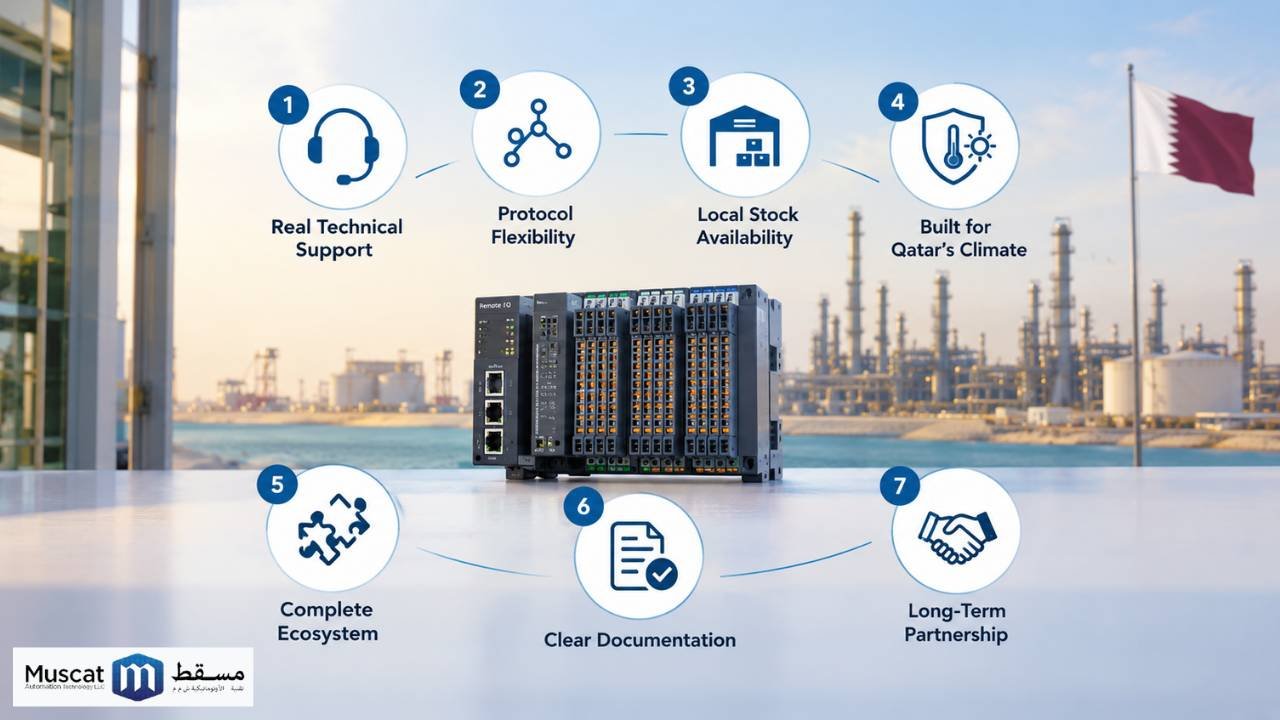
1. Real Technical Support You Can Actually Reach
The real test isn’t the price sheet — it’s the phone call. Can you get someone who actually understands channel counts, isolation requirements, and network topology? Or do you just get a rep reading back the spec sheet you already have? A capable remote I/O modules supplier Qatar teams rely on should be walking you through system sizing before you buy, not scrambling to help after something’s already failed on-site. Anyone who’s been burned by a vendor that goes quiet post-sale knows exactly why this matters, and why they stick with suppliers who pick up the phone.
2. Protocol Flexibility Across Your Existing Network
Every plant has its own communication backbone — Modbus RTU/TCP, EtherNet/IP, PROFINET, or something proprietary tied to older Advantech or Siemens gear. Whatever your facility already runs, a good remote I/O modules supplier Qatar operations should choose needs to support it, not steer you toward some closed ecosystem that boxes you in later. This gets especially tricky when you’re expanding an existing remote I/O network rather than building fresh. If your current setup runs Modbus and a supplier only stocks proprietary hardware, you’re signing up for integration headaches nobody has time for mid-project.
3. Local Stock So You're Not Waiting on Overseas Shipping
Timelines in Qatar’s industrial world don’t bend easily. Commissioning dates get locked in, contractors get scheduled around them, and everything downstream depends on the hardware showing up when it’s supposed to. A remote I/O modules supplier Qatar contractors can genuinely rely on keeps regional stock instead of shipping from overseas warehouses where customs delays are basically a coin flip. Ask straight up: if a module dies mid-commissioning, how fast can they get you a replacement? That answer tells you more than any brochure will.
4. Hardware Actually Built for Qatar's Climate
The heat here isn’t gentle, and neither is the sand. A remote I/O modules supplier Qatar’s oil, gas, and utility sectors depend on needs to offer wide operating temperature ranges, properly IP-rated enclosures, and real vibration resistance — as a baseline, not as some pricey upgrade you have to ask for by name. And in hazardous zones common to oil and gas work, IECEx or ATEX certification isn’t a nice-to-have. It’s non-negotiable. If a supplier gets cagey or vague when you ask about certification, that’s a red flag worth paying attention to.
5. A Full Ecosystem, Not Just a Pile of Loose Parts
Here’s something engineers usually learn the hard way: buy I/O modules from one vendor, power supplies from another, and gateways from a third, and sooner or later something won’t play nice with something else. It’s a smarter move to find a remote I/O modules supplier Qatar teams trust for the whole control architecture. Muscat Automation builds its catalog around exactly that idea — automation controllers and I/O systems alongside compatible gateways, backplanes, and signal conditioning hardware, all meant to work together. Fewer surprises at integration, and one number to call if something doesn’t fit.
6. Documentation and Transparency You Shouldn't Have to Fight For
A legitimate remote I/O modules supplier Qatar plants should trust with critical infrastructure gives you full datasheets, wiring diagrams, and configuration guides without you having to chase them down over three separate emails. If documentation is thin, vague, or mysteriously “available after purchase,” that’s usually a tell that the hardware is grey-market with no real manufacturer backing. Same goes for warranty terms — authorized partners tend to have cleaner RMA processes, while the unofficial resellers have a funny way of going quiet the second something breaks.
7. Proven, Demonstrable Experience Across Qatar's Actual Industries
Oil and gas, water treatment, power utilities, manufacturing, building automation — each one asks something a little different from remote I/O hardware, and a supplier who’s only ever worked in one of them is going to have blind spots in the rest. A remote I/O modules supplier Qatar’s industrial sector has actually worked across these verticals will understand things a newcomer just won’t — like why a wellhead monitoring setup needs different certification than a commercial building’s HVAC system. That kind of experience matters even more on projects that also need programmable automation controllers and remote I/O modules integrated into a network that’s already live.
Key Benefits of Choosing the Right Remote I/O Modules Supplier Qatar Trusts
1. Real-Time Monitoring and Faster Response
When remote I/O is set up properly, sensor data lands in your control room the instant something shifts — not whenever the next scheduled inspection happens to roll around. That’s the difference between catching a problem early and finding out about it after it’s already cost you.
2. Correct System Sizing from Day One
Buying the wrong module because nobody bothered explaining isolation requirements is more common than you’d think. A supplier who actually knows what they’re doing makes sure your team gets equipment that fits the network from the start, instead of gear you’re swapping out six months later.
3. Environmental and Compliance Confidence
A supplier worth your trust flags the need for certified enclosures in hazardous zones before you ask — not after an audit catches it and everyone scrambles.
4. Long-Term Reliability from Proven Partnerships
Working with someone who’s already solved similar integration problems on other projects means fewer surprises for you, and a much faster fix when something unexpected does turn up.
Our Remote I/O Modules Supplier Qatar Products and Solutions
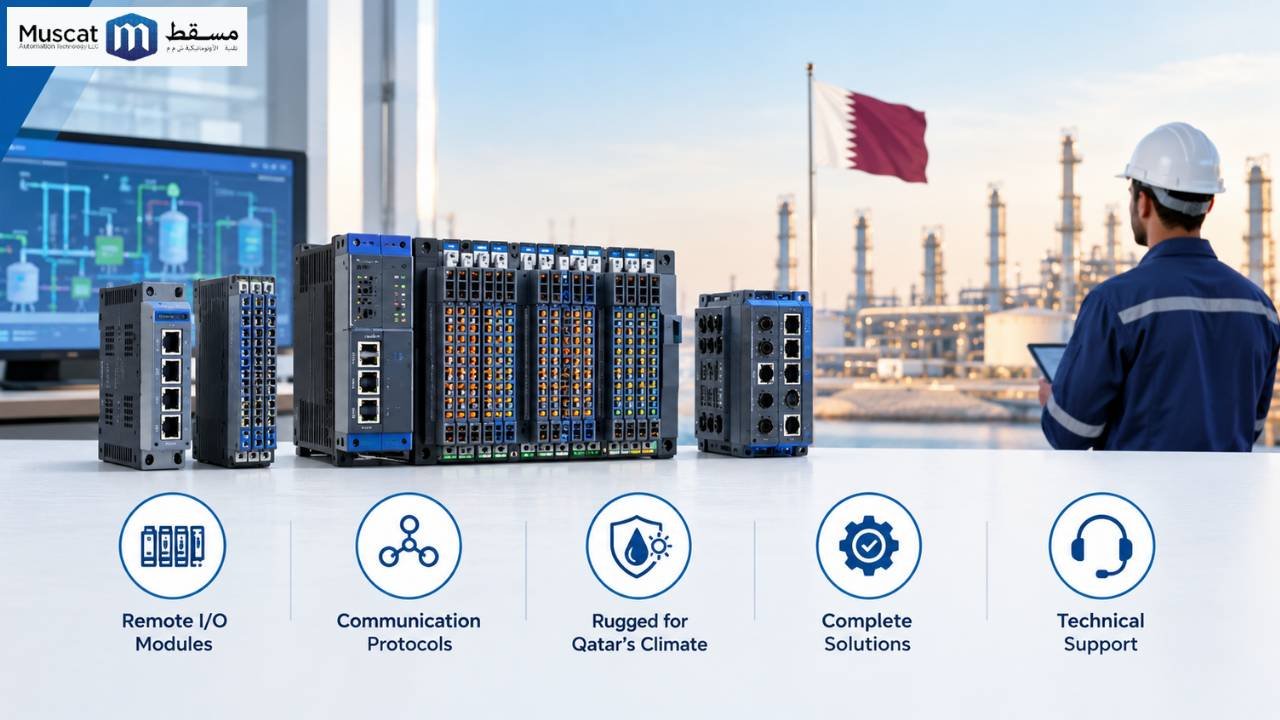
Muscat Automation, in partnership with Advantech, puts together a solid range of remote I/O and edge automation gear built with Qatar’s conditions in mind, not as an afterthought. Here’s what that actually looks like:
Remote I/O Modules — a full lineup covering Ethernet, wireless, and fieldbus-based modules for oil and gas, water treatment, and manufacturing, chosen specifically to keep communicating reliably even when temperatures spike.
Automation Controllers and I/O Systems — automation controllers and I/O systems that let you build a complete, compatible control setup from one source, rather than stitching together parts from vendors who’ve never talked to each other.
Gateways and Remote Terminal Units — gateways and remote terminal units (RTUs) that connect distributed I/O nodes back to a central SCADA platform, handling protocol conversion so data actually makes it back to the control room across large sites.
Being part of a well-established network of automation companies in Qatar also means Muscat Automation stays close to what local engineers actually need, rather than just pushing whatever’s in an international catalog regardless of whether it fits regional conditions.
Conclusion
None of these seven things matter much on their own — they add up. Great documentation with no local stock still leaves you waiting weeks. Fast shipping with no real technical support still leaves your team guessing during a stressful commissioning weekend. The suppliers actually worth your time check every one of these boxes, not just the one or two that were convenient to advertise.
Take the time to properly vet whoever’s going to supply the remote I/O backbone your facility depends on — not just for the initial order, but for the life of the system. Get this right, and it shows up in your uptime, your maintenance costs, and how painlessly your automation project scales down the line. The remote I/O modules supplier Qatar teams pick today is usually the one they’re still calling five years from now.
FAQ
1. What does a remote I/O modules supplier Qatar actually do beyond selling hardware?
A genuine supplier helps size your I/O system correctly, matches hardware to your existing communication protocol, checks environmental certifications for your site, and sticks around for support afterward — not just a sale and an invoice.
2. Why does protocol compatibility matter when choosing a remote I/O modules supplier Qatar?
If your plant runs Modbus, EtherNet/IP, or PROFINET, your new modules need to speak the same language as your existing PLC or SCADA system. Get locked into a supplier’s proprietary protocol, and you could end up needing extra gateways — or a full redesign — down the line.
3. What certifications should a remote I/O modules supplier Qatar's hardware carry for hazardous zones?
Look for IECEx or ATEX certification for oil, gas, and other hazardous-area work, along with proper IP ratings against dust and moisture. These aren’t nice extras — they’re tied directly to safety compliance.
4. How fast should a remote I/O modules supplier Qatar be able to replace failed hardware during commissioning?
If they’re holding regional stock, a day or two is realistic. If a supplier’s talking about weeks because everything’s coming from overseas, that’s a real risk to your schedule worth thinking twice about.
5. How do I choose the right remote I/O modules supplier Qatar for my project?
Weigh technical support, protocol flexibility, local stock, climate-rated hardware, honest documentation, and real experience in your specific industry. A supplier who checks all of those, not just one or two, is the one worth building a long-term relationship with.