
Integrated Marketing Communication Process: Steps, Benefits, and Examples

Integrated Marketing Communication (IMC) is a way of bringing different marketing activities together to communicate one clear message to customers. Instead of running advertising, social media, SEO, content marketing, email marketing, and public relations separately, businesses can connect these activities as part of one marketing plan.
The Integrated Marketing Communication process starts with understanding the target audience and their needs. Marketers then set clear goals, create the main brand message, choose the right communication channels, launch the campaign, and measure the results. A well-planned IMC strategy can help a business build brand awareness, improve customer engagement, increase trust, and achieve better marketing results
What Is Integrated Marketing Communication?
Integrated Marketing Communication is a marketing approach where different communication channels work together to promote a brand, product, or service. The main idea is to make sure that customers receive a clear and consistent message wherever they interact with the brand.
For example, a digital marketing agency may use its website to explain its services, SEO to attract people searching for digital marketing services, social media to build awareness, Google Ads to generate enquiries, and email marketing to follow up with potential clients. If all these activities communicate the same brand message, they become part of an integrated marketing communication strategy.
Why Is Integrated Marketing Communication Important?
Customers today use many channels before deciding whether to buy a product or service. They may find a business through Google Search, visit its website, check its social media profiles, read reviews, and later see an advertisement before making a decision. This makes consistent communication important for businesses.
IMC helps connect these different customer touchpoints. When the brand name, message, visuals, tone, and overall experience are consistent, customers can understand the business more easily and develop greater familiarity with it.
For marketers, IMC also makes it easier to coordinate campaigns and compare performance across different channels. By looking at data such as website traffic, engagement, leads, and conversions, businesses can understand what is working and make better marketing decisions.
Integrated Marketing Communication Process
1. Identify the Target Audience
The first step in the Integrated Marketing Communication process is understanding the target audience. A business needs to know who its potential customers are, what they need, what problems they face, and how they make purchasing decisions.
Marketers can study factors such as age, location, occupation, interests, online behaviour, purchasing habits, and customer needs. This information helps businesses create more relevant messages instead of using the same communication for everyone.
For example, a digital marketing agency targeting local businesses in Kerala may focus on business owners who are looking for SEO, Google Ads, social media marketing, or website development services.
2. Analyse the Current Situation
Before starting a marketing campaign, businesses need to understand their current position in the market. This includes studying competitors, customers, industry trends, existing marketing activities, and previous campaign results.
Competitor research can help identify what other businesses are doing and where there may be opportunities to stand out. Market research can also provide useful information about customer expectations and changing trends. Tools such as SWOT analysis can help businesses understand their strengths, weaknesses, opportunities, and threats.
This research gives marketers a stronger foundation for making marketing decisions.
3. Set Marketing Communication Objectives
After understanding the audience and market, the next step is to decide what the campaign should achieve. Clear objectives make it easier to plan the campaign and measure its success.
A business may want to increase brand awareness, generate leads, bring more visitors to its website, increase social media engagement, promote a new product, or increase sales. The objectives should be measurable whenever possible so that the business can compare the actual results with its original goals.
For example, instead of simply saying “increase website traffic,” a business could set a specific goal of increasing relevant website visits during a particular campaign period.
4. Develop the Core Brand Message
The next step is creating the main message that the business wants customers to remember. The message should clearly explain what the brand offers and how it can help the target audience.
A strong message should be simple, relevant, and focused on customer needs. The wording may change slightly depending on the platform, but the main idea should remain consistent.
For example, if a company promotes affordable and reliable digital marketing services, the same core idea can be communicated through its website, social media posts, advertisements, and email campaigns.
5. Choose the Right Communication Channels
After creating the main message, marketers need to choose the channels that can best reach their target audience. These may include SEO, social media marketing, Google Ads, content marketing, email marketing, public relations, influencer marketing, direct marketing, and traditional advertising.
Businesses do not need to use every available platform. The right channels depend on the target audience, campaign objective, industry, and available budget.
For example, a B2B company may give more importance to SEO, Google Search Ads, LinkedIn, email marketing, and informative content, while a fashion brand may focus more heavily on Instagram, influencer marketing, video content, and paid social advertising.
6. Develop the Integrated Marketing Strategy
Once the communication channels are selected, marketers need to connect them into one overall strategy. Each channel should have a specific purpose while supporting the same campaign objective.
For example, social media can create awareness, SEO can attract organic search traffic, Google Ads can reach users who are actively searching for a service, and email marketing can follow up with potential customers.
When these activities are planned together, customers can move through the buying journey more smoothly while receiving a consistent brand message.
7. Create and Distribute Marketing Content
Content is an important part of integrated marketing communication because it carries the brand message to the audience. Depending on the campaign, businesses may create blog posts, social media content, videos, images, email newsletters, landing pages, advertisements, and other marketing materials.
Good content should answer customer questions, provide useful information, and match the purpose of the selected platform. For SEO, content should also be useful to the reader rather than being created only to include keywords.
For example, a travel company could publish a detailed destination guide on its website, create short videos for social media, run Google Ads for relevant searches, and send special offers through email. All of these pieces of content can support the same campaign.
8. Implement the Campaign
Implementation is where the planned marketing activities are launched. Content is published, advertisements are activated, emails are sent, social media campaigns begin, and other communication activities are carried out according to the campaign plan.
During this stage, marketers should make sure that the correct message, branding, links, offers, and audience targeting are being used. They should also monitor early responses so that problems can be identified quickly.
Good campaign implementation is not only about launching the campaign. It also requires regular monitoring and coordination between different marketing activities.
9. Monitor and Measure Performance
Measuring results is an important part of any marketing communication strategy. Without performance data, it can be difficult to know whether a campaign is actually achieving its goals.
Depending on the campaign, marketers may monitor website traffic, search performance, social media engagement, advertising clicks, leads, conversions, email engagement, and other relevant metrics.
For example, if the goal is to generate leads through Google Ads, the business should look beyond clicks and also track enquiries or conversions. This provides a clearer picture of whether the campaign is producing useful business results.
10. Evaluate and Optimise
The final stage is reviewing the campaign and making improvements based on the results. Marketers should identify which channels, messages, content formats, and audiences performed well and which areas need improvement.
Optimisation may include changing ad copy, improving landing pages, adjusting audience targeting, updating content, testing different messages, or moving more budget towards better-performing channels.
Key Components of Integrated Marketing Communication
Integrated Marketing Communication can include both traditional and digital marketing methods. Advertising can help businesses reach a wider or highly targeted audience, while public relations can support brand reputation and media visibility. Sales promotion can encourage customers to take action, and direct marketing can help businesses communicate with specific customer groups.
Digital channels are also an important part of modern IMC. These include SEO, social media marketing, content marketing, email marketing, PPC advertising, influencer marketing, and website marketing. The right combination depends on the business goals, target audience, industry, and campaign budget.
Benefits of Integrated Marketing Communication
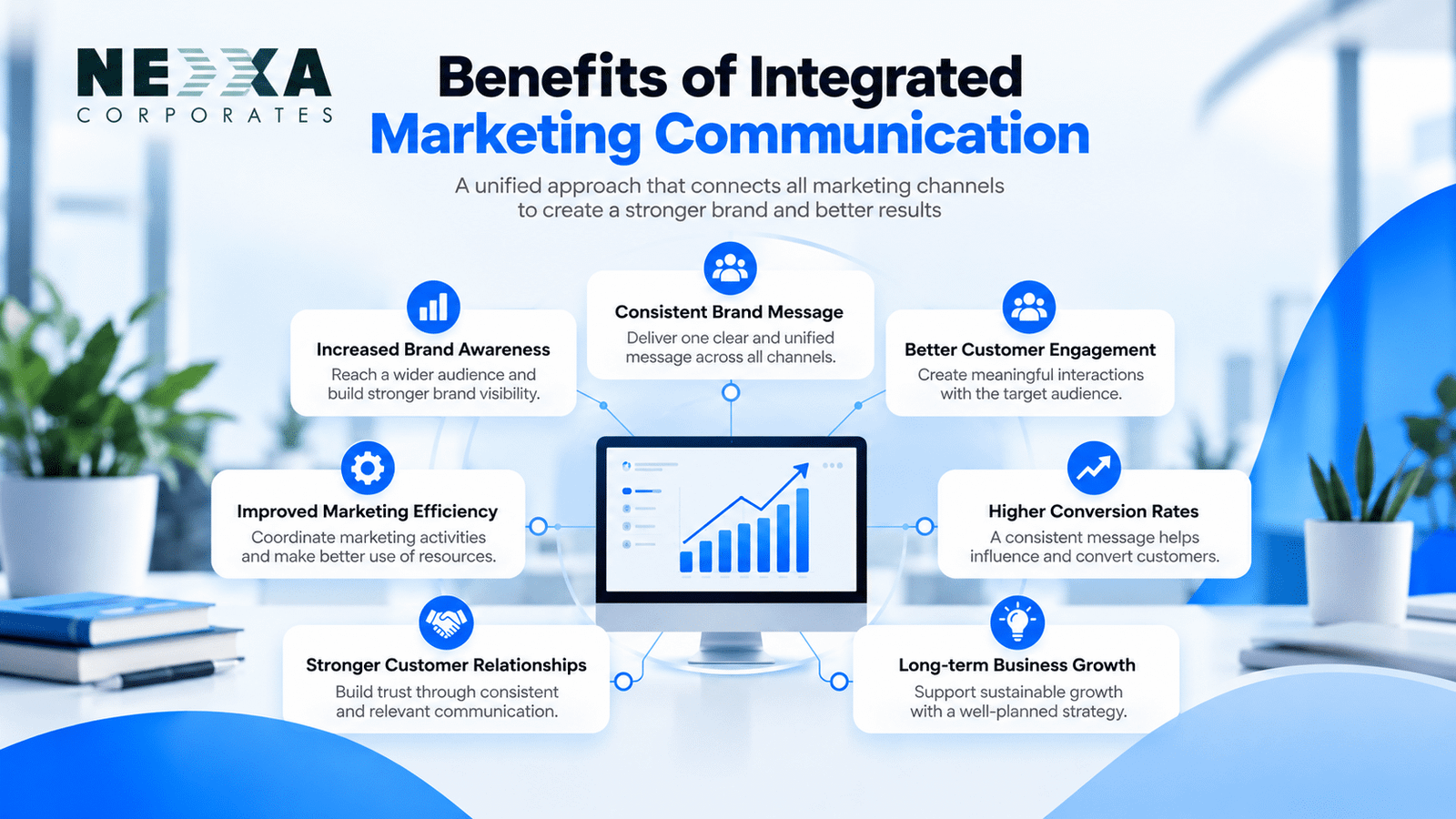
One of the main benefits of IMC is consistent brand communication. When different marketing channels support the same message, customers are more likely to recognise and understand the brand.
IMC can also improve customer engagement because businesses can communicate with customers at different stages of their buying journey. For example, SEO can help a customer discover a business, social media can build interest, content can provide useful information, and email or advertising can encourage the customer to take action.
Another benefit is better marketing coordination. When campaigns are planned together, businesses can reduce unnecessary duplication and make better use of their marketing resources. However, the actual results depend on factors such as the quality of the strategy, audience, offer, budget, content, and execution.
Integrated Marketing Communication Example
Consider a company launching a new smartphone. Instead of depending on one advertisement, the company can create an integrated campaign using several marketing channels.
The company could use social media to introduce the smartphone and highlight its features. Google Ads could reach people searching for smartphones or related products. The company could also publish useful content comparing the phone’s features with competing products. Technology influencers could demonstrate the product, while email marketing could inform existing customers about the launch and any available offers.
Although each channel has a different purpose, the product name, main benefits, branding, and campaign message should remain consistent. This is a practical example of how different marketing activities can work together as an Integrated Marketing Communication strategy.
Challenges of Integrated Marketing Communication
Managing an integrated marketing campaign can be challenging because businesses often use several platforms at the same time. Keeping the brand message consistent across websites, social media, advertisements, emails, and other channels requires proper planning and coordination.
Another challenge is measuring the role of each channel. A customer may see an advertisement, visit a website, read a blog, and later make a purchase after receiving an email. Because several touchpoints may influence one customer, marketers need suitable tracking and analytics to understand campaign performance.
Changing customer behaviour, new digital platforms, competition, limited budgets, and changing market conditions can also make IMC more challenging. Regular monitoring and optimisation can help businesses respond to these changes.
How to Create an Effective IMC Strategy
An effective IMC strategy starts with a clear understanding of the target audience and business objectives. Marketers should research customer needs, study competitors, set measurable goals, and develop a clear brand message before selecting communication channels.
The selected channels should work together rather than operate independently. Consistent branding, useful content, clear communication, and proper campaign tracking are important throughout the process.
Marketers should also review campaign performance regularly. Testing different content, messages, audiences, and advertising approaches can provide useful insights. Using these insights to improve future campaigns makes the IMC strategy more practical and effective.
Role of Digital Marketing in Integrated Marketing Communication
Digital marketing plays an important role in modern Integrated Marketing Communication because customers use digital channels throughout the buying journey.
SEO helps businesses attract users through organic search, while social media marketing helps create awareness and engagement. PPC advertising can reach people with specific search intent, while email marketing can support lead nurturing and customer retention. Content marketing provides useful information and can help a business demonstrate knowledge in its industry.
Analytics tools also play an important role by providing information about website visitors, campaign performance, engagement, leads, and conversions. When these digital activities work together with a consistent brand message, they become an important part of an integrated communication strategy.
Conclusion
Integrated Marketing Communication helps businesses bring different marketing activities together instead of treating each channel as a separate activity. It connects advertising, SEO, social media, content marketing, email marketing, public relations, and other communication methods around common business and marketing objectives.
A successful IMC process starts with understanding the target audience and market. It then involves setting clear objectives, creating the core brand message, selecting the right channels, developing useful content, implementing the campaign, measuring results, and continuously improving the strategy.
For modern businesses, consistent communication is increasingly important because customers interact with brands through many different touchpoints. By combining relevant channels, using real campaign data, listening to customer feedback, and regularly optimising marketing activities, businesses can create a stronger and more consistent customer experience.
FAQ
1. What is Integrated Marketing Communication?
Integrated Marketing Communication (IMC) is a marketing approach that combines different channels such as SEO, social media, advertising, content marketing, and email marketing to deliver a clear and consistent brand message.
2. What is the Integrated Marketing Communication Process?
The IMC process includes identifying the target audience, analysing the market, setting objectives, creating a clear message, choosing communication channels, launching the campaign, measuring results, and optimising the strategy.
3. What are the advantages of Integrated Marketing Communication?
IMC helps businesses maintain consistent communication, improve customer engagement, build brand awareness, and manage different marketing channels more effectively.
4. How does social media marketing support IMC?
Social media helps businesses share content, reach their target audience, build brand awareness, and engage with customers while supporting the overall marketing message.
5. Why is IMC important for modern businesses?
IMC is important because customers interact with brands through multiple channels. A consistent message across websites, social media, ads, and other platforms can create a better customer experience.