
Industrial Waste Water Management: Smart Solutions for Modern Industries
To retain an organisation’s operational and sustainability requirements, the growth of industrial wastewater management systems becomes vital. The industrial growth cycle demands advanced wastewater management systems. Manufacturing, oil and gas industries, and modern industrial establishments require sophisticated and reliable systems to manage wastewater, reduce environmental hazards, and comply with wastewater discharge permits.
The wastewater management system is undergoing improvements through integrated intelligent monitoring systems, advanced control systems, and increased automation.StarTech combines its extensive experience and knowledge in industrial wastewater management systems with industrial automation, smart and industrial networks, and smart industrial systems to provide wastewater management systems.
What is Industrial Waste Water Management?
Controlling waste generated by industrial processes involves collecting the waste, separating it, and monitoring and removing industrial waste operations in a safe manner.
Industrial wastewater is a source of heavy metals, chemicals, and other contaminants that can harm the environment if not handled appropriately.
A wastewater treatment plant that is used across the entire industry could provide many benefits:
- Minimize environmental footprint
- Enhance the efficiency of operations
- comply with environmental standards
Industries such as textiles production, pharmaceuticals, and food processing rely on advanced wastewater management techniques to lower the long-term operating costs.
Importance of Industrial Wastewater Treatment
The significance of the management of industrial facilities’ wastewater treatment cannot be overstated. Wastewater can cause pollution to water resources, soil and groundwater, rivers and lakes, and can create a critical health and environmental problem for the community within which the industrial facility operates and the workers at the facility.
Proper sewage treatment and wastewater handling provide several benefits:
- Reduce Pollution
- Improved water quality
- Improved compliance
- Reduced operational risk
- Improved water reclamation
- Improved sustainability
Industries prefer systems that treat wastewater with high efficiency and retain a low-energy and low-maintenance design.
Understanding the Wastewater Treatment Process
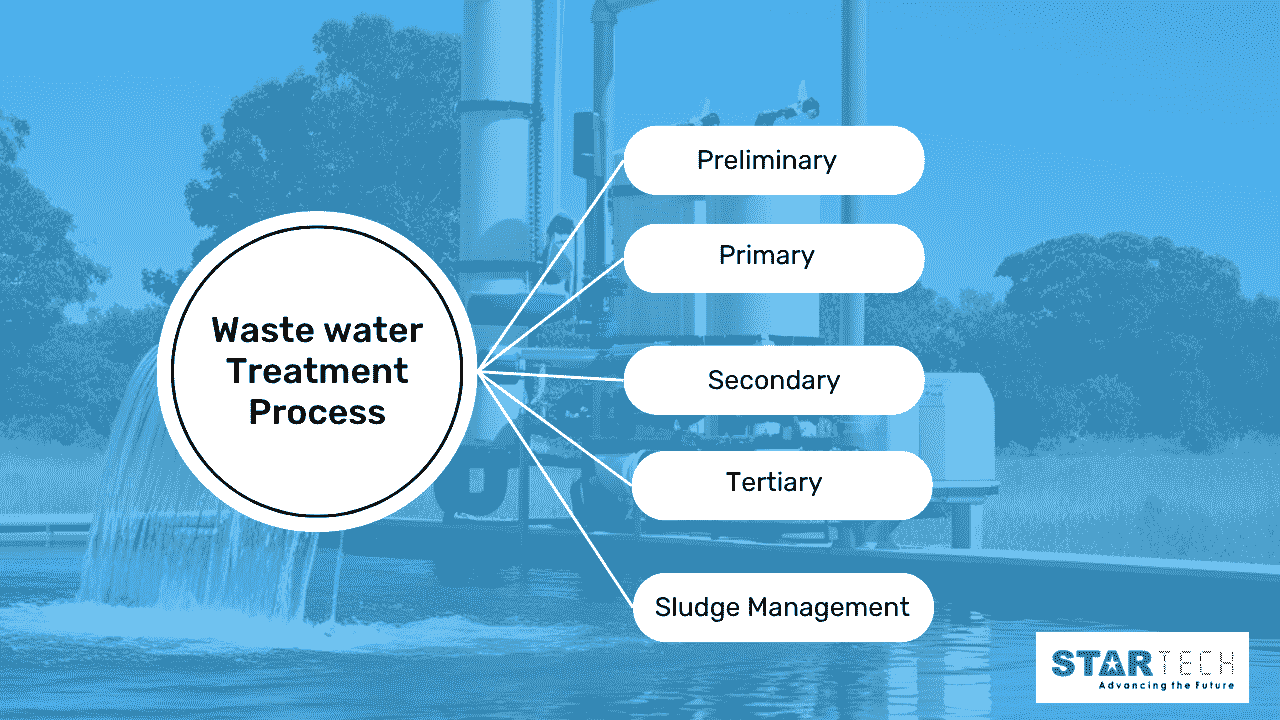
The process of wastewater treatment comprises several phases that aim at the elimination of water pollutants and quality improvements before discharge or reusing
Preliminary Treatment
At this point in the process, massive solid waste materials like debris, sand, and grit are eliminated. The process typically involves screening and sedimentation processes.
Primary Treatment
Suspended solids settle out at the bottom of treatment tanks during primary treatment. Floating oils and materials are also removed from the water’s surface.
Secondary Treatment
Secondary treatment is a biological process that decomposes organic waste materials. Microbes help eliminate toxic contaminants from wastewater.
Tertiary Treatment
This process uses filtration, chemical treatment, and disinfection for further improvement in water quality. For industries requiring high-quality recycled water, tertiary treatment is often employed.
Sludge Management
The sludge produced from the wastewater treatment process is collected, treated and properly disposed of or used for some applications.
Industries can optimize every phase of the treatment process with the help of automation technologies and smart monitoring systems.
Role of SCADA System in Waste Water Management
The SCADA System plays an essential role in modern industrial wastewater administration. SCADA is an acronym for Supervisory Control and Data Acquisition It’s a technique for live monitoring, controlling and automation in the wastewater industry for industrial machinery.
In the business of wastewater treatment in the wastewater industry.
In the wastewater industry, the SCADA System assists operators in observing and improving the effectiveness of the process. Treatment facilities for wastewater require a variety of equipment, including motors, pumps, filters, sensors, and equipment for chemical dosage.
Hand-managing these systems can be time-consuming, challenging and susceptible to errors during the operation. SCADA systems simplify these tasks through central monitoring and control that’s automated.
A SCADA System can help operators in many ways
Monitor Water Flow and Pressure
SCADA systems constantly keep track of how much water flows, tanks’ levels, pressure levels and pipeline conditions in every area of the facility.
Monitoring in real-time helps operators identify any irregularities, such as pipes obstructions and leaks and leaks and overflow issues prior to they cause serious problems.
Track Water Quality Parameters
It is vital to ensure the health of industry wastewater treatment. SCADA systems collect data from sensors that measure temperatures, pH, the turbidity and levels of chemical concentration as well as levels of contamination.
Operators can utilize this data to assess the standard of treatment and ensure compliance with environmental regulations.
Detect Equipment Failures
Facilities for wastewater are largely dependent on pumps, blowers, motors, and filters. An SCADA System will detect any malfunctions in equipment, such as excessive heat, unusual vibrations or power interruptions.
Early detection of problems helps prevent unintentional breakdowns and also reduces long-lasting downtime.
Remotely Control Valves and Pumps
A single of the biggest advantages of SCADA systems is their remote operations features. Operators are in a position to control motors or pumps, valves, and treatment systems in the control centre or even from distant locations.
This increases the range of operations and decreases the need for manual testing.
Examine Operational Data in Real Time
SCADA systems provide real-time data visualisation through dashboards, alarms, reports, and graphical GUIs.
Operators are in a position to evaluate the efficiency of their plants quickly and make quicker decisions to improve the process of treating wastewater.
Alarm Management and Notifications
SCADA Systems automatically notify alarms and alerts when there are abnormal conditions observed. Operators are immediately notified of malfunctions caused by chemical imbalances in the equipment, malfunctions, or system overloads and can take more swift remedial actions.
Support Predictive Maintenance
SCADA systems are able to store operational data that can then be used to determine maintenance plans.
Through analysing trends in the industry of equipment performance, professionals can detect issues before they become major and assist in reducing maintenance costs and improving the life span of equipment.
Main Obstacles of Industrial Waste Water Management
The main issues facing the industry when it comes to managing wastewater systems include:
High Costs
Systems for managing wastewater in industrial settings are extremely expensive to construct, maintain, and operate.
Laws and Regulations
There are always regulations and laws to follow for properly disposing of trash, as well as the elimination of pollution.
Maintenance and Repairs
The system is comprised of valves, pumps, sensors, and filters that have to be maintained regularly and changed.
Monitoring
To assess the risk of contamination, regular checking and testing of water quality must be carried out.
Energy Issues
Traditional systems for the disposal of wastewater and control are extremely expensive due to their high energy consumption.
The latest and emerging technology of automation offers efficient and cost-effective methods to improve these technologies to manage the wastewater.
Smart Technologies Used in Industrial Wastewater Management
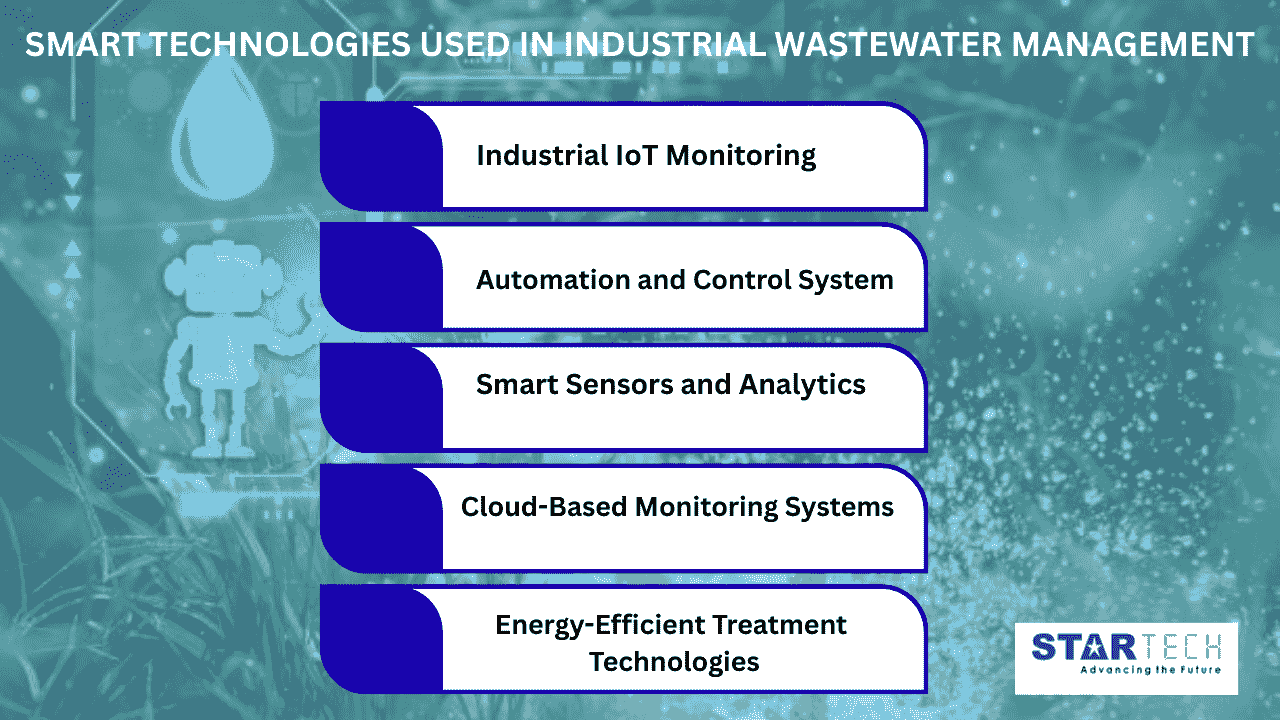
Modern wastewater facilities make use of advanced technologies to enhance the effectiveness of monitoring performance, efficiency, and efficiency of the operation.
Industrial IoT Monitoring
Industrial Internet of Things devices can analyse the data in real time from wastewater treatment systems, allowing the user to monitor the state of the system from afar.
Automation and Control Systems
Automatic systems can help enhance treatment, reduce intervention with a hand, and increase the efficiency of the process.
Smart Sensors and Analytics
Sensors with intelligent sensors that monitor water pressure and temperature. The sensors are monitored continuously.
Cloud-Based Monitoring Systems
Cloud computing can allow companies to access all their data operations remotely and enhance the efficiency of making the right choices.
Energy-Efficient Treatment Technologies
The majority of the latest technologies are focused on reducing the use of energy and maintaining the effectiveness of treatments.
This technology is used to manage industrial waste. It also encourages environmentally sustainable practices in business that can be eco-friendly.
Benefits of Automated Waste Water Management Systems
Predictive maintenance cuts repair costs and extends the lifespan of equipment.
The industry of Real-Time Monitoring and Reporting
It will be able to constantly monitor system performance and generate automated reports.
Automated industrial waste management systems provide many benefits for the environment and operations.
Enhanced Operational Efficiency
Automation reduces the errors that are caused by hand and improves the precision of treatment.
Reducing downtime
Monitoring in real-time helps you detect issues earlier and prevent accidental equipment failures.
Improved Water Quality Control
Automation Systems adhere to similar standards of treatment and improve the quality of water.
Lower Maintenance Costs
Sustainability in Industrial Operations
Efficient waste management assists in ensuring sustainability for the environment, as well as efforts to save water.
Industries That Need Industrial Waste Water Management
A variety of industries depend on the latest methods for managing wastewater to ensure long-term sustainability and business operations.
Manufacturing Industries
The water that factories produce is contaminated by industrial processes, along with any chemicals that remain.
Oil and Gas Sector
Drilling and refineries both require specialised equipment for treating and filtering the water they supply for effective operation.
The food and Beverage industry
produces organic food waste, which could be contaminated and potentially hazardous over time.
Pharmaceutical Industry
Production facilities involved in pharmaceutical manufacturing have to adhere to stringent guidelines in the handling and treatment of the water used in production processes.
Chemical Processing Industry
Chemical plants produce hazardous waste that requires new methods of treatment.
Textile Industry
The process of making textiles involves using dyes and chemical compounds that create waste materials and floating particles, which must be broken down into textile fibres.
Future Trends in Industrial Waste Water Management
Technological updates in intelligent industrial solutions and wastewater management continue.
AI Enhanced Surveillance
Enhanced predictive analytics and operational performance will be achieved through AI.
Automation Advancements
A high level of precision and minimal human contact will be achieved through advanced automation.
Proactive Equipment Interventions
Diminished equipment failure will be a result of enhanced predictive capabilities.
Water Management
Greater investment in water recycling solutions will be evident.
IoT Devices
Augmented infrastructure will bolster the monitoring and management of operations.
Cloud-Based Operations
Cloud solutions will support the centralisation of system management and the availability of data in real time.
All these innovations will lead to better management of industrial wastewater and to more sustainable industrial operations.
CONCLUSION
Managing industrial wastewater seems really key these days, especially for keeping things sustainable in the environment and making sure operations run smoothly without breaking any rules. Businesses can cut down on pollution a lot with these advanced treatment setups, and it also helps save water while optimising how everything works.
I think automation and smart monitoring are changing the whole process in wastewater treatment. Things like SCADA systems integrate in and make operations more efficient, sort of turning them into something smarter overall.
FAQ
1. What is industrial wastewater management?
Industrial wastewater management encompasses the collection, treatment, monitoring, and disposal of wastewater created by industrial activities
2. Why is industrial wastewater treatment important?
Industrial wastewater treatment reduces pollution, protects water resources, promotes sustainability, and ensures compliance with environmental standards.
3. What are the stages of the wastewater treatment process?
The wastewater treatment process typically consists of preliminary, primary, secondary, and tertiary treatment phases.
4. How does a SCADA System help in wastewater management?
A SCADA system offers real-time monitoring, remote control, data collection, and automation of wastewater treatment processes.
5. Which industries require sewage treatment systems?
Industries such as manufacturing, oil and gas, food processing, pharmaceuticals, chemicals, and textiles require sewage treatment systems.